HISTORY OF PHOTOGRAPHY
PHOTOGRAPHY is derived from two Greek words
photo and graph. Together they literally mean
“writing with light.”
Early camera
Daguerreotype Camera- The
early commercial camera and
could not adjust the lens or enlarge photos
from film.
'Camera Obscura-a large room that could show images on a wall, was
understood
by the Arab Scholar Alhazan in the 11th century,
who defined the
principles that would
be later
developed into photographs. 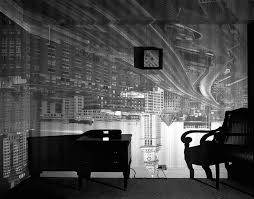
A
typical 1930s camera with a mounted flash
Digital Camera
DIGITAL-comes
from Latin roots and means
“Using numbers to represent values.”
DIGITAL
PHOTOGRAPHY-a binary code to form an image from light
is
the process of assigning numbers in.
STEVEN SASSON
-an engineer for a
major camera company,
invented the world’s first
digital camera.
It
took 23 seconds to record a 10,000 pixel photograph and served
as a prototype that has revolutionized the way pictures are recorded and
edited.
A modern digital camera-
camera that is
available to consumers that uses a
memory card to record
images instead of film.
Basic Photography
The 6 Things To Know
•
Know your camera
•
Hold the camera still
•
The 2-second rule
•
Take a few more
•
Tell a “story”
•
Capture the “mood”
C . E . L
. L .
•
C omposition
•
E xposure
•
L ens
•
L ight
Composition
Principle 1
Un-clutter the picture.
Zoom in.
A good photograph is a subject,
a context, and nothing else. Remove any clutter that detracts from your
message. Get closer -- zoom in -- and crop as tightly as possible
Principle 3
Use of frames, lines
& diagonals
Create impact by using frames
and real or inferred lines that lead the viewer's eye into and around the
picture
Principle 4
Dramatic Perspective
Create impact by photographing
your subjects from unexpected angles. Imagine yourself as an electron spinning
around the subject, which is the nucleus of an atom.
Exposure
•
Aperture
•
Shutter speed
•
ISO
Aperture: General Rules
and tips
A larger lens opening
(f1.8-3.5) offers the following advantages:
Allows you to shoot
more often with just natural lighting à
helps to reduce harsh shadows and red-eye caused by flash.
Allows more light to
pass through, the camera will be able to choose a slightly higher shutter speed
à
helps to reduce motion blur.
Helps to reduce
"depth-of-field“ (for effect).
Principle
Affect depth of field
(range of distance in focus
When shooting a landscape,
as much of the photograph in sharp focus as possible (f11 to f22). In a portrait,
shallower dof (f2.8-8) will isolate your subject from distracting backgrounds
Shutter speed: General
Rules and tips
 shutter speed the capture is blur

To capture blur-free
"action" photographs (e.g. Sports), you need to make sure the camera
is using a high shutter speed, e.g.1/125th of a second or more.
Less light gets through
to the imager as shutter speed is incre ased, thus difficult to use higher
shutter speeds in lower light situations.
Alternatives: Allow
more light to pass through the lens (larger aperture setting), the other is to increase
the ISO
Principle
Freezing motion
(achieve the desired effect
Absolutely sharp images
are not always the best. They can look static
and dull. At slow shutter speeds the camera blurs the image of moving objects,
and can create a more convincing image of movement
ISO: General Rules and
tips
•
ISO settings are often rated at
100, 200, 400, 800, 1600, and even 3200 on some models
•
Use an ISO of 100 or 200 when
taking photographs outside in sunny conditions.
•
If the sky is overcast or it is
evening time, or in a darkened room, then use an ISO within the range of 400 to
800.
•
Night time or in cases of low light
you might need to set your digital camera ISO to 1600. If not your photo will
appear too dark, if at all.
LENS
Principle
Wide-angle lenses allow
more of a picture to be captured (need focal point) while telephoto lenses tighten
the scene and isolate the subject (but affect the depth of field & increase
camera shake)
Light
Principle 1
Avoid using flash, even
for night shots
The indiscriminate
blast of flash destroys the intimate mood of existing light
Principle 2
Side Lighting instead
of front or overhead (noon-time) lighting
The use of frontal flash lighting tends to flatten faces.
Use side lighting as
much as possible, even moving your subject, if necessary, next to a window.
Principle 3
Use fill-in flash, for
backlit situations or overhead sun
Overhead sun creates dark
eye sockets and unattractive shadows, which can be reduced by using a flash. Use fill-in flash also for situations where
the subject is backlit (camera auto exposure will be confused)
ISO Setting
Principle
Set the lowest setting
possible to avoid noise
ISO measures the sensitivity
of the image sensor. The lower the number the less sensitive
your camera is to light and the finer the grain.
Here are some example with the use of the camera when the
ISO
Chatter speed
Aperture
Here are some example with the use of the camera when the
ISO
Chatter speed
Aperture
-is lower than the normal usage.

the result of the picture is dark even if it is under the sun light.
This is the sample picture when the
ISO
Chatter speed
Aperture
is higher than the normal usage in photography.

This is the sample picture captured in the depth of field of DSLR camera. the subject were focused and the background of the subject become blur.

This is the sample of photo, captured when it is low of third. The subject of the photo capture together with the background is clear.

